
Drama 373 A: Theatre History III
Modern Theatre
Spring 2026
Class meeting times: Monday, Wednesday 11:30 am-1:20 pm
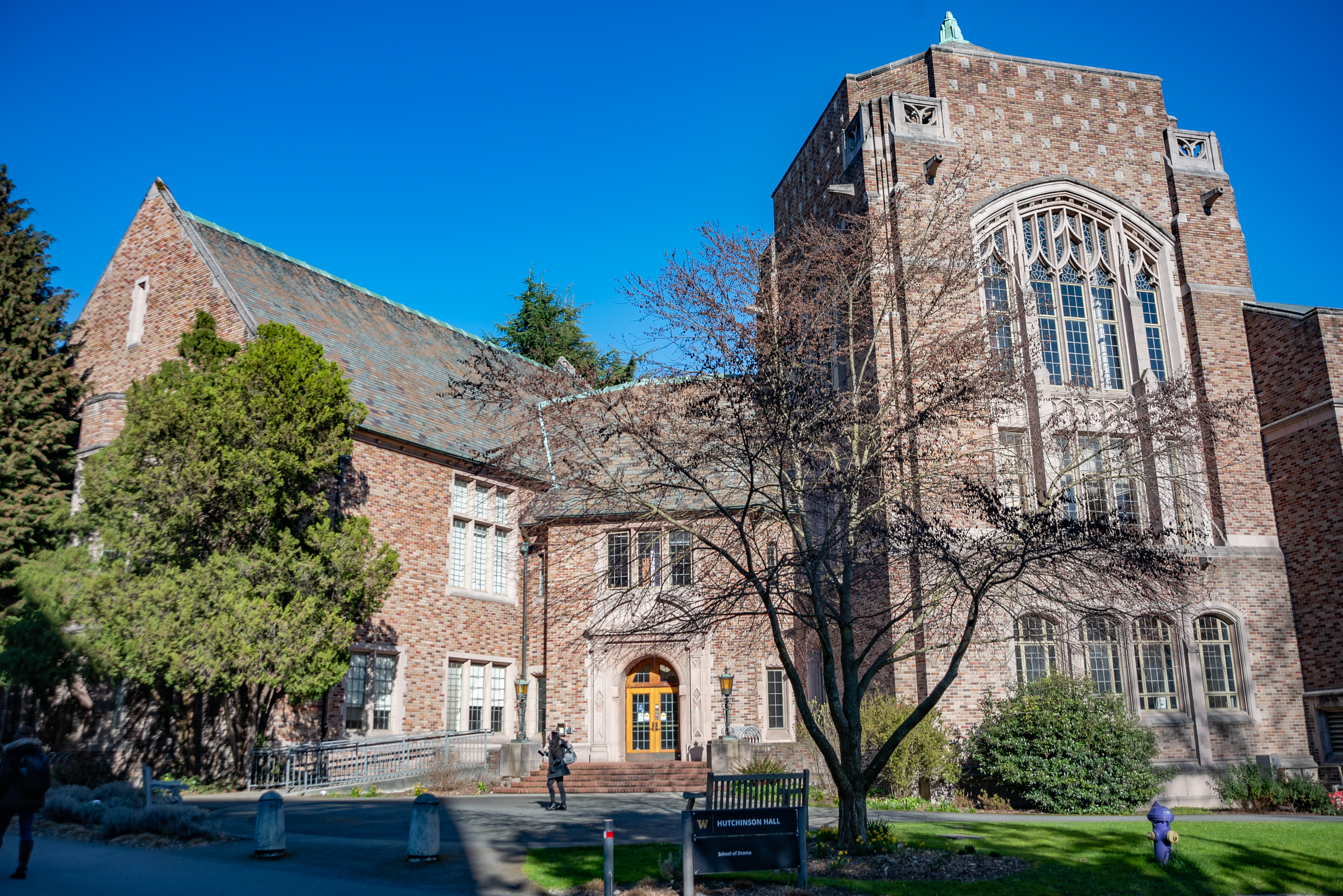
Location: Hutchinson 130
Instructor: Dr. Stefka Mihaylova
Office Hours: Friday, 2:30-3:20 and by appointment, Hutchinson 112B
E-mail: stefkam@uw.edu
Premise
This course surveys the artistic movements included within the category “modern theatre”: melodrama, realism, symbolism, expressionism, the historical avant-garde, epic theatre, and the theatre of the absurd. Beginning in the late nineteenth century and continuing into the 1960s, these movements have created the theatrical vocabulary that every contemporary actor, director, designer, and spectator is expected to know. We will examine these movements’ contribution to modern theatre and modern society, placing them within the larger narrative of modernity. We will focus particularly on the relationship between theatre and politics. We will also see how these movements reverberated into the theatre and performance of the late twentieth and early twenty-first centuries.
By the end of the course you will
- learn about the development of major representational modes (realism, symbolism, etc.) and the historical factors informing their development
- learn major concepts and events from the social and intellectual history of modernity
- learn to read plays in their historical context
Texts
- At the university bookstore:
- The Wild Duck;
- Uncle Vanya;
- Machinal;
- The Life of Galileo;
- Endgame and Act Without Words;
- Topdog/Underdog;
- Top Girls;
- Ubu Roi
- A course packet is available for purchase at EZ Copy N’ Print, 4336 University Way.
Film, Drive My Car (2021), directed by Ryusuke Hamaguchi. You can watch it on HBO or rent it on Amazon Prime.
Evaluation:
All students are accountable for the information about academic integrity printed in the Student Conduct Code. Students are also responsible for the following standards: (1) Participation is required in all classes, and lack of participation is cause for failure. (2) Credit will not be given for two courses that meet at the same time. (3) To receive credit for a course, students must complete all of the work assigned. (4) Assignments must be turned in on time. Students are not entitled to make-up assignments or to grades of Incomplete unless the instructor has approved such arrangements in advance. Extensions should be requested in advance of the deadline.
This course will be strictly governed by the University of Washington’s policies on academic dishonesty. Submitted assignments will be routinely photocopied.
Assignments Due
Participation: 33% Every Class Session
Test One 33% April 29
Test Two: 33% June 3
Participation: At the beginning of class, students will write in response to a question formulated by me, the instructor. These written responses will be part of your participation grade. The answers could be incorrect. What counts is your best effort to answer them. You need to submit 15 of these responses for a full participation grade.
We will adhere to the rules of engagement we agree upon in our class contract. In addition, all students are expected to adhere to the rules of engagement specified in the Student Conduct Code: https://www.washington.edu/cssc/for-students/student-code-of-conduct/
Tests 1 and 2: These closed-book, in-class tests include three to five short questions, asking you to define terms and identify historical figures, and a longer essay question. Review questions will be distributed before each exam.
Optional W credit Students who wish to receive a writing credit for this class will write a research paper on a topic studied in the class. An abstract and annotated bibliography will be due by May 6. A first draft of your paper will be due by May 15. The final draft will be due on June 10.
Criteria for Assessment:
A grades reflect work that demonstrates deep, thorough and detailed knowledge, clear logical structures, correct and purposeful use of language, proper referencing, vivid and imaginative thinking and writing, a clear grasp of theoretical concepts, developed reasoning, and well-substantiated arguments.
B grades reflect work that demonstrates deep, thorough and detailed knowledge, clear logical structures, correct and purposeful use of language, proper referencing, a good grasp of theoretical concepts, developed reasoning, and well-substantiated arguments, but not much imaginative thinking and writing. B work does not contribute original ideas and arguments, but relies only on the ideas and knowledge discussed in class.
C grades reflect work that shows inconsistent or partial solutions to problems, and understanding of basic ideas and methods.
Failing grades (D and lower) reflect work that shows inconsistent or partial solution to problems, is superficial, confused, showing incorrect or absent references, an unoriginal or absent viewpoint, poor grasp of critical theory, sloppy writing or proofreading, undeveloped ideas, lack of originality, irrelevant material, or irrelevant substantiation.
Note on the course content: The history of modern theatre coincides with a political history marked by violent events: slavery and the social upheavals of the mid-nineteenth century, World War I, the Holocaust, etc. Modern theatre engages with these traumatic topics, sometimes using language and imagery that may appear insensitive to us. It is impossible to avoid this history, along with its language and imagery. It is equally impossible to appreciate the artistic accomplishments of modern drama without knowledge of this history.
Religious Accommodations: Washington state law requires that UW develop a policy for accommodation of student absences or significant hardship due to reasons of faith or conscience, or for organized religious activities. The UW’s policy, including more information about how to request an accommodation, is available at Religious Accommodations Policy (https://registrar.washington.edu/staffandfaculty/religious-accommodations-policy/). Accommodations must be requested within the first two weeks of this course using the Religious Accommodations Request form (https://registrar.washington.edu/students/religious-accommodations-request/)
Consent: Consent makes everyone in theater better. We, in the School of Drama, care about creating learning and training environments that equitably support students across all identities with strong consent policies. We believe that strong consent policies enhance student learning. We believe in “brave space” learning environments where all can explore theories and practices of theater in ways that do not violate or sexualize others, especially students. We intend for every student who moves through this program to feel honored in the work of theater. Through a shared understanding of consent, students can stretch, grow, and make big choices as artists.
Class Schedule (by week number):
** All texts should be read before the designated class; all films should be watched before the designated class
Week One
M, March 30 Introduction, Lecture on the History of Western Modernity
Questions: What is modernity? What is modernism? What are the characteristics of a modern society?
W, April 1 Melodrama, Sentimentalism, and Human Rights
Read:
- Gladys Li, The Submission of Rose Moy (1924) (This text was provided for the class by Madison Sullivan, a reference librarian for Drama and Art);
- Margaret Cohen, “Sentimental Communities,” in The Literary Channel: The International Invention of the Novel, 106-32
Watch: Asian Americans, Episode One, Breaking Ground (electronically available through the UW library)
Questions: (1) What modern ideas (covered in the lecture) do you see reflected in The Submission of Rose Moy? (2) What conventions that you personally associate with melodrama did you notice while reading The Submission of Rose Moy? (3) Give an example of melodrama in our present-day art, entertainment, or politics. (4) Throughout the nineteenth century, human-rights activists (abolitionists, suffragists, etc.) used sentimental rhetoric. How did sentimental rhetoric serve their political purposes?
Week Two
M, April 6 Melodrama, cont.; The Minstrel Show
Read: Douglas A. Jones, “Black Politics but Not Black People,” TDR 57.2 (2013): 21-37 (course packet);
Watch: PBS Documentary: “Égalité for All: Toussaint Louverture and the Haitian Revolution,” on youtube: https://www.youtube.com/watch?v=Sn32cWUT83E
Watch: PBS Documentary: “Blacks and Vaudeville,” on youtube: https://www.youtube.com/watch?v=8kbnn3E7Gp8
Questions: (1): The Haitian Revolution is often brought up as a factor for the popularity of the Minstrel show, which was created shortly after it. What could be the connection? (2) How has the history of the Minstrel show affected contemporary performance practices, such as casting?
W, April 8 Ibsen and the Beginnings of Realism
Read:
- Henrik Ibsen, The Wild Duck (1885); Emile Zola,
- “Naturalism in the Theatre”
Listen: “1848: Year of Revolution,” on BBC Radio 4: http://www.bbc.co.uk/programmes/b019gy9p (This is a podcast that you can download.)
Questions: (1) What are the major features of characterization, plot, and conflict that make The Wild Duck a realist play? (2) How does Ibsen use sentimental/melodramatic conventions? (3) According to literary and social historians, the French revolution of 1848 was a major factor for the popularity of realism. How could the revolution of 1848 have facilitated realism’s becoming a mainstream aesthetic mode?
Week Three
M, April 13 Anton Chekhov’s Psychological Realism
Guest Speaker: Actor Mark Jenkins
Read: Anton Chekhov, Uncle Vanya (1903)
Watch: “Empire of the Tsars Romanovs, part 3” on YouTube: https://www.youtube.com/watch?v=3TIRaGMOxGo
Watch: Drive My Car (2021), directed by Ryusuke Hamaguchi; it is available on HBO. You can also rent it on Amazon Prime.
Questions:
- How does Chekhov’s realism differ from Ibsen’s? How does Uncle Vanya rework the conventions of melodrama and sentimentalism? Chekhov believed that social commentary should be implicit in realist theatre. Where do you find such implicit commentary in Uncle Vanya?
- What does Hamaguchi’s film Drive My Car reveal about Chekhov’s Uncle Vanya? Discuss the film’s climax: Koshi bowing to Yusuke, just before the police takes Koshi away, arresting him for the murder he has committed. Why does Koshi bow to Yusuke? How does his gesture illuminate the film’s answer to its major question: how to live meaningfully?
W, April 15 Realism, cont., Stanislavsky
Guest speaker: Mark Jenkins
Read:
- Stanislavsky, “When Acting Is an Art”;
- Stanislavsky, “Action,”
- Stanislavsky, “Imagination”;
- Stanislavsky, “Emotion Memory” in An Actor Prepares (1936)
Questions: Why does Stanislavsky need to defend the concept that theatre is art? When is theatre art according to Stanislavsky? How does Stanislavsky’s System continue and how does it oppose the legacy of sentimentalism?
Week Four
M April 20 Modernism; Symbolism
Read:
- Madame Rachilde, The Crystal Spider (1894);
- Erin Williams Hyman, “Theatrical Terror: Attentats and Symbolist Spectacle.”
Watch: Georges-Eugene Haussmann: The Man Who Rebuilt Paris, https://www.youtube.com/watch?v=SlHlSCvh0JA&t=95s
Questions: Symbolist artists deliberately depart from realism. Discuss the ways in which The Crystal Spider diverges from realism. What does the play try to accomplish that perhaps couldn’t be accomplished with realist means?
W April 22. Alternative assignment
No class. Instead, see a performance of Appropriate at the Seattle Repertory Theatre and write a five-page reflection (Times New Roman 12, 1” margins, double-spaced), discussing a relationship between theatre and politics in the play. You will get 10% extra credit for this assignment that can be added to any of the tests or to your participation grade.
Week Five
M April 27, Expressionism
Watch: The Century: America's Time - 1920-1929: Boom To Bust (https://www.youtube.com/watch?v=RN7ftyZigYs)
Read: Sophie Treadwell, Machinal (1928)
Questions: How did the spread of modern technologies, such as the typewriter and the telegraph, inform the emergence of expressionism? Judging from Machinal, what are the features of expressionist drama? The scene in the speakeasy is the only one scripted in a realist rather than an expressionist mode. Why, do you think, did Treadwell script this scene realistically?
W, April 29 The Historical Avantgarde
Read:
- King Ubu, by Alfred Jarry (1896);
- “The Futurist Manifesto” (1909), by Marinetti
Watch: “Vsyevolod Meyerhold” on YouTube, https://www.youtube.com/watch?v=4Hw9icvuUzo
Watch: Dynamite Club: The Anarchists https://www.youtube.com/watch?v=vVGsoiE3zQQ&list=PLE653BF062C136B62&index=8
Question: What associations does the word avant-garde evoke for you? What about Meyerhold’s method of “biomechanics” could be avant-garde? What features of the futurist manifesto make it an avant-garde manifesto?
Week Six
M, May 4 Test one
W, May 6 Brecht’s epic theatre
Read:
- Brecht, The Life of Galileo (1943);
- Brecht, Alienation Effect in Chinese Acting (1935)
- Brecht, “The Modern Theatre Is the Epic Theatre” (1930)
Watch: “Weimer Republic,” https://alliance-primo.hosted.exlibrisgroup.com/primo-explore/fulldisplay?docid=CP71325470400001451&context=L&vid=UW&lang=en_US&search_scope=all&adaptor=Local%20Search%20Engine&tab=default_tab&query=any,contains,Weimar%20Republic%20video&offset=0
Questions: (1) Brecht aspired to create a Marxist theatre. Where in the play and in the essays do you see specific examples of Marxist influence? (2) Speculate about why Brecht wants his spectators to be physically active. In other essays, he also encourages spectators to smoke and drink during plays, insisting that such pleasurable activities will sharpen their critical skills. Again, why not just sit back in one’s seat and do nothing? As I said, I am asking you to formulate hypotheses.
Week Seven
M, May 11 The Theatre of the Absurd
Read: Beckett, Endgame (1953)
Watch: Samuel Beckett, Silence to Silence, documentary: https://www.youtube.com/watch?v=4ffMoTfGCfY
Questions: Beckett’s characters typically exist in a post-tragic state, i.e., a tragedy has occurred prior to the events depicted in the play, and they are “fallen” humans. What, do you think, were the circumstances of Hamm’s tragic fall that led to his current situation in Endgame? What could have been his tragic flaw?
Here is a working definition of the theatre of the absurd: Characters act realistically in extreme circumstances.
W, May 13 1968 and the Black Arts Movement
Watch: God is Angry: The Black Power Movement, a documentary, https://video.alexanderstreet.com/watch/god-is-angry-the-black-power-movement
Read:
- Amiri Baraka, The Toilet (1964)
- Amiri Baraka, “The Revolutionary Theatre.”
Questions: How did the political events of 1968 and post-WWII radical performance inform each other? How is the “new” avant-garde of 1968 similar to and different from the historical avant-garde? What qualifies The Toilet and “The Revolutionary Theatre” as avant-garde pieces?
Week Eight
M, May 18 Postmodern Returns
Read:
- Suzan-Lori Parks, Topdog/Underdog (2000);
- Parks, “An Equation for Black People on Stage”
- Lyotard, “Answering the Question: What is Postmodernism?”
Questions: What, do you think, is Topdog/Underdog about? Why does Parks return to the figure of Abraham Lincoln in this play? What does Lincoln stand for? How would you describe Parks’s aesthetic: as Brechtian, realist, absurdist, or in another way? Justify your answer.
W, May 20 Caryl Churchill’s Political Theatre
Read: Top Girls (1994)
Questions: Caryl Churchill is a socialist feminist playwright, who has critiqued the kind of female empowerment for which Margaret Thatcher stood. What political positions do you see represented by each of the two sisters? What is the significance of Angie’s nightmare at the end of the play and of the dreamlike sequence, at the beginning, where Marlene attends a party with famous women from the past?
Week Nine
M, May 25 Memorial Day; No class
W, May 27 Postmodernism and Devised Performance
Read:
- Tim Etchells, “A Decade of Forced Entertainment”
- Tim Etchells, “On Performance and Technology”
In class: watch excerpts from Bloody Mess (2004), by Forced Entertainment
Questions: Forced Entertainment has called their theatre “posttelevisual”: theatre for people in whose homes “the TV was always on.” Bloody Mess engages with the reality TV shows, such as Big Brother, that became popular at the turn of the twenty-first century. Reflect on the artistic and social impact theatre can have in a post-televisual age.
Week Ten
M, June 1 Postmodern Returns, part 2
Watch: Mabou Mines Dollhouse at https://orbiscascade-washington.primo.exlibrisgroup.com/discovery/fulldisplay?docid=alma99161824253901452&context=L&vid=01ALLIANCE_UW:UW&lang=en&search_scope=UW_EVERYTHING&adaptor=Local%20Search%20Engine&tab=UW_default&query=any,contains,Mabou%20Mines%27%20Dollhouse&offset=0(available through the UW library website)
Question: Trying to restore the shock effect that Ibsen’s A Doll’s House had in the late 19th century, in 2003 director Lee Breuer cast little people as the male characters in his adaptation and set it in a literal dollhouse. In this, he was supported by the Association of Little People of America. How do you evaluate the artistic and social effects of Breuer’s adaptation? What works for you? What doesn’t work?
W, June 3 Test 2