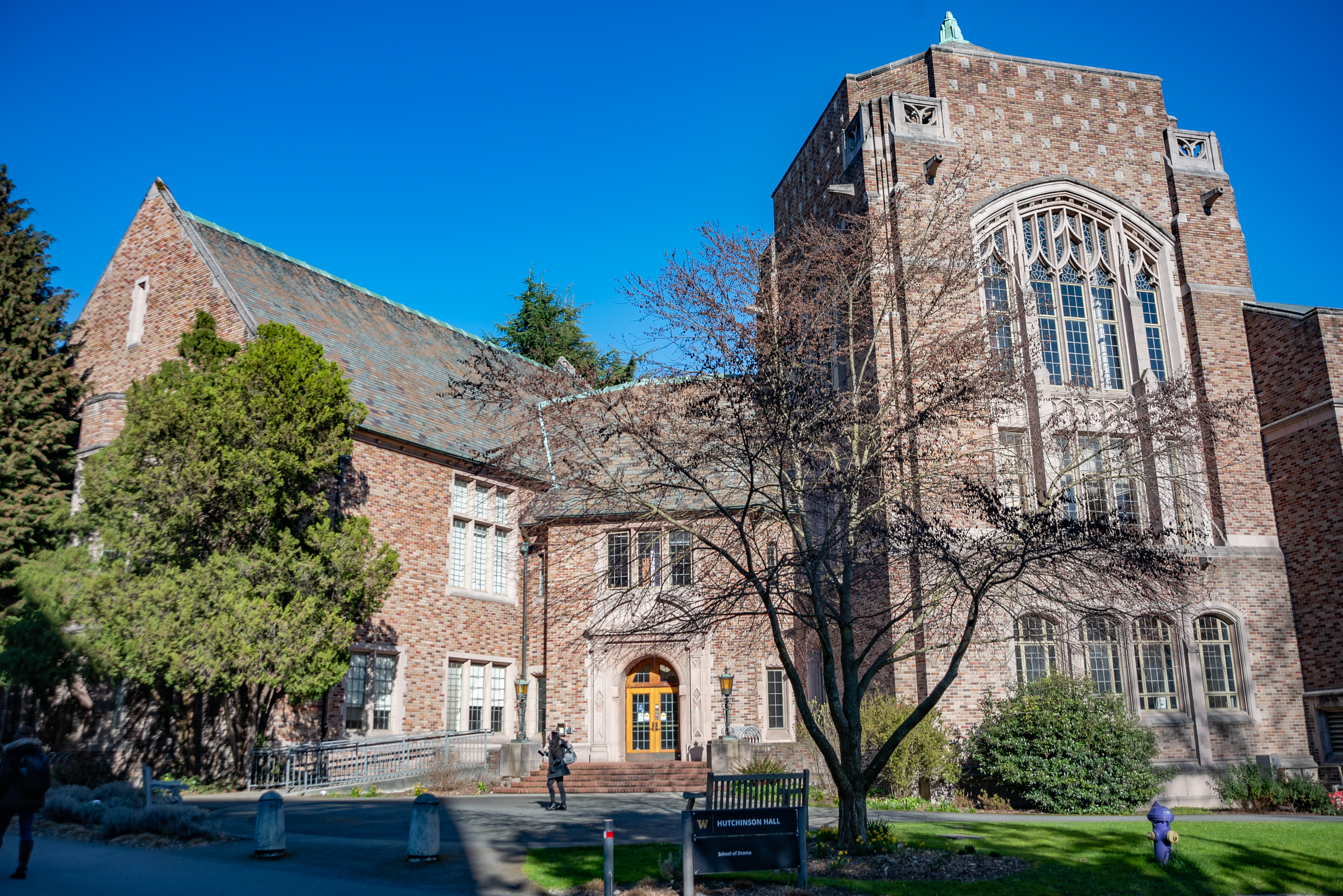
DRAMA 461 Intermediate Directing
Spring Quarter 2026
HUT 205 Monday-Wednesday-Friday 1:30pm – 3:20pm
|
|
|
|
Instructor: |
Shana Bestock |
|
Office: |
Hutchinson |
|
Email: |
sbestock@uw.edu This is by far the best way to contact me. Email and I will generally respond within 48 hours.
|
|
Office Hours: |
By appointment. |
"In a sense the director is always an imposter, a guide at night who does not know the territory, and yet has no choice." — Peter Brook
Class Description:
Directing is fundamentally an act of communication. While the role of a director can feel overwhelming, this course helps you focus on the director’s primary craft: working with actors to shape dynamic, emotionally truthful work. Students will develop practical tools for rehearsing actors, giving clear and actionable direction, and fostering a collaborative rehearsal room. Throughout the quarter, students will direct short contemporary scenes under faculty supervision, practicing the craft of rehearsal, feedback, and revision to develop confidence, clarity, and flexibility in directing. Through hands-on scene work and faculty guidance, students will develop practical tools for building collaborative rehearsal processes.
This is a class based in the ideas of praxis – a process that is equal parts researching/thinking in your mind and on-your-feet testing/trying out of those proposals through real-world implementation. In this kind of creative process, good ideas are only half the work – we can only know if an artistic choice is the right by testing it out. Iteration is key to praxis – we form a creative idea, come up with a proposal about how to execute it, try that idea and collect data about how the experiment went, then go back and reflect on whether to keep pursuing it or make changes it given the new information gained.
Questions I’m excited to explore:
- What exactly is it that directors make? What are their core tools and how do we improve them with practice?
- How do we find material that speaks to our unique individuality?
- How do we use our lived experience to bring to life others’ lived experiences?
- How do you collaborate in a rehearsal process? What do you need personally to make your best work and how do you support others in doing so simultaneously?
Class Objectives:
- To increase comfort and confidence in directing
- To think critically about different styles of performance and presentation
- To practice compromise and collaboration with other artists
- To build concrete skills in staging, running a rehearsal room
Required Materials:
- Most important: An open mind!
Recommended Materials:
Books Recommended for Purchase:
- Jory, Jon. Tips: Ideas for Directors
- Hauser, Frank Notes on Directing: 130 Lessons in Leadership from the Director's Chair
- Hodge, Francis & Michael McLain. Play Directing: Analysis, Communication, and Style
Note on purchasing books – the one I’d love everyone to have their own copy of is Jory’s Tips; we’ll choose some for discussion each week. I find the Haser and Hodge invaluable resources when staging scenes, but you can also find these in the library and decide for yourselves whether they are worth purchasing.
I will also made selected passages available as pdfs.
Attendance/Lateness Policy:
This course is practical in nature – in other words the techniques are only learned by doing them. In other words, if aren’t here, you can’t learn. Similarly, the work of this class is interdependent. We rely on each other to show up both literally and metaphorically to make our art.
At the same time, life happens. There are plenty of reasons why you can be 100% committed and still need to miss a class. You are offered one no questions excused absence per quarter before your participation grade will be impacted. Please do your best to contact me (and your collaborators) as far in advance of an absence as possible. Please be on time to class. If you are having a tough time making it to class on time, please contact me. Be aware that since this class is 80% group project work, if you miss multiple classes you are jeopardizing other students’ experience. Please begin the quarter with every expectation of not missing class!
Required Class Work:
- WEEKLY RESPONSES (10 at 2.5 pts each):
Each week I’ll ask you to check in about the work you’re doing. These will mostly look like rehearsal reports and/or response to readings, and reflection on your completed scenes. Your opinions are never on trial, but honest and critical thinking is expected. This is also a space for you to offer feedback to me about the class as a whole. This is a casual response (not a formal essay).
- CLASS PARTICIPATION & PREPARATION (30 classes at 2.5 points each):
Prep as needed outside of class. You will have time in class to rehearse with your group. If you miss a class, I expect you to try and schedule a make-up rehearsal with your actors. Participation also means watching and reflecting on your fellow directors’ work, and participating in discussions. As mentioned above, you’ll have one “freebie” excused absence per quarter. For every absence beyond this, you’ll be marked with a 0 for a missed day. Please try to let your artistic partners know if you’ll be missing ahead of time.
Extra Credit points are achievable through work such as:
- Extra reading/research on the craft and practice of directing
- Seeing local theater productions and reflecting on the direction (see me if you need recommendations and/or help with an affordable ticket)
- Attending other events in our local theater community
Grading Scale:
4.0-3.9: A 3.8-3.5: A- 3.4-3.2: B+ 3.1-2.9: B 2.8-2.5: B- 2.4-2.2: C+
2.1-1.9: C 1.8-1.5: C- 1.4-1.2: D+ 1.1-0.9: D 0.8-0.7: D-
Any student under 0.7 points will receive a failing (E) grade. You may always email me if you are unsure about your progress in class or want feedback about your work.
Conduct In Class:
The following notes are required for this class. If you agree to stay in this course you are expected to follow these guidelines:
- Avoid distractions. Cell phone interruptions are distracting to the entire class. Do your best to minimize outside distractions while in class. (Emergency exceptions should be discussed prior to class).
- Be respectful of other classmates. Making stuff is hard and often uneven in its progress. To be creative requires support and mutual trust, so let’s offer each other dignity and kindness to each other as best as we are able in our work together.
- No discrimination of others on the basis of gender, sexuality, race, class, ability, nationality, age, etc. This includes “teasing” or “joking,” even if your intention is to be friendly. It will not be tolerated.
- Approach the work with bravery and curiosity. Exploring new creative territory requires you to dare to go places that are unknown and, hopefully, exciting. I make the promise not to push to places you are not ready to go to, especially if you voice those concerns. In return I ask that students are willing to try to the best of their ability, even if an exercise seems strange. If you are confused about why we’re doing something, ASK! Chances are your questions are those of others in the room and offer an opportunity to learn together.
- Please call ME in if you feel like I’m not creating a class in which you can be your whole self. If something I do harms you or makes you feel excluded, I very much hope you feel comfortable enough with me to let me know. I will do my best to listen with open ears and THANK YOU for being generous enough to offer that perspective. If you need to voice a concern anonymously or beyond this scope, see the link on voicing concerns under the “Respect for Diversity Statement” section below.
Respect for Diversity Statement:
The diversity students bring to this class (including gender identity, sexuality, dis/ability, age, socioeconomic status, ethnicity, race, nationality, religion, and culture) should be honored as a resource, strength and benefit. I do my best to create an environment in which each class member is able to hear and respect others. If something is said or done in the classroom, in a discussion, or in the group project process, by myself as instructor or by other students, that is troubling or causes discomfort or offense, the impact of that experience is something important, deserving of attention and I would like to know about its occurrence.
The School of Drama has also developed the following resource that can help you navigate how to proceed if you would like to voice a concern beyond one of us as your instructor:
https://drama.washington.edu/process-voicing-concerns
Statement on Consent, Power Dynamics and Staging of Intimate Material:
Theater is, by nature, an act that requires great vulnerability from its creators. To do the work of bringing forth affective and emotional storytelling in live time using our actual bodies for an audience of other people in the room watching can be overwhelming and disorienting in the moment. Bringing ourselves to those heightened performance states or trying to assist others in doing so can also mean we walk up to and negotiate lots of boundaries and discomforts. In the past some theaters made it routine practice to treat artists (especially actors) without the care, respect and consenting participation that is every person’s human right. Even if such practices weren’t glaringly obviously ethical concerns that should make us pause (and, just to be clear, they are) I genuinely don’t believe it’s even artistically beneficial to encourage someone to push through a creative process that makes them feel unsafe or violated. I’m a firm believer that our greatest growth comes not when we’re scared or untrusting of our environment, but when we feel centered, empowered, and supported in taking big risks we understand the parameters of and have enthusiastically agreed to. Working with trust allows us to play the long game of art-making: to find the honest and authentic places that make our creative work sing, to learn how to trust our intuition – the most useful creative muscles we have – rather than abdicate that judgment to some outside force.
Because of that fact, it’s hugely important to set ground rules, build trust, and work toward common understanding when negotiating common rehearsal elements like physical touch, staging heavy or intimate material, or “pushing” artists into new territory. In this class, we’ll talk more about rehearsal etiquette, and how to build trust and work through disagreements in respectful and consent-oriented ways. But as a starting tool here’s the popular “FRIES” acronym to help remember best practices around consent:
Freely given: Consenting is a choice you make without pressure, manipulation, or under the influence. If you feel like a part of you is being pushed into something, you are welcome to ask for a pause to reflect on that feeling at any time. Actively building in time during rehearsals to check in regularly about this is a key way to avoid coercion!
Reversible: Anyone can change their mind about what they feel like doing, anytime. (This includes actors, directors, stage managers, designers, etc). Even if you’ve worked on this section of script before, even if you’re in the midst of a scene, even if there’s pressure to get something finished for a deadline. It can be useful to practice this early on so everyone feels comfortable!
Informed: You can only consent to something if you have a full understanding of what’s going to happen. For example, if a director gives another actor a secret direction to push you or touch you in a way that hasn’t been agreed upon in advance. If you have a question about something, stop and ask!
Enthusiastic: You should only do stuff you genuinely agree to do, not things that you feel you’re expected to do. Pushing through discomforts to find growth IS part of the artistic process, suppressing your judgment about what feels right is not. The boundary can be tricky! If you’re not sure, slow down, step back, and/or call in an outside person to reflect with. I am SO happy to jump in and talk through these kinds of issues.
Specific: Saying yes to one thing (like holding hands with an acting partner) doesn’t confer a blanket yes to other “risky” or “intimate” choices (like being kissed or shoved).
We’re not here to “wing it.” This is a space of learning. The point is to figure out how you want to do things, try it, assess and adjust. Pushing through without giving yourself time to do that learning undercuts the whole point of the class. My mantra for our work together is:COLLABORATION AT THE SPEED OF TRUST
And with all this said, it’s also likely people will make mistakes along the way. In art and life we can’t always be perfect and definitely can’t predict the future, which means that sometimes people can’t know what will feel weird before it happens we will sometimes cause hurt we don’t mean to. It’s not the job of someone on the receiving end of a mistake to fix it AND ALSO I know from my own journey as an artist that it can be MASSIVELY helpful for someone to get such feedback so they can know how their actions are impacting others. (Providing that person does the work of listening with openness and curiosity.) If something happens, it absolutely can be possible to back up, repair, rebuild trust and come back stronger than before. The key isn’t proposing that no one will ever make a mistake, but instead building a robust collaborative space so when smaller issues arise, we have instilled the practice of talking about and addressing them so we avoid ongoing or systemic problems of mistrust and abuse.
Above all:
- If you’re not sure how to solve something, are feeling uncertain about best practices in rehearsal, or need a gut check about whether something that’s happening is ok or not, know that I am always here to listen and help.
- It can be uncomfortable or feel weird to implement some of these things up in groups, especially when you’re just getting to know each other. Resist the temptation to minimize or dismiss your intuition! Take the daring creative step to name these complex dynamics and learn to solve them together!
- Telling someone when something bothers you allows them a chance to fix and adjust, which they may not be aware of or able to do without that feedback. (That doesn’t mean it’s ok, but it does mean that with such useful info they may be more likely to do better.)
- If someone from within the School of Drama (fellow undergrad, graduate student, staff or faculty member) is making you feel violated or sexualized, that is unequivocally not ok and is a violation of the program’s philosophy.
- I am here to be a support and advocate. If you need especially timeline assistance with something related to consent, rehearsal process, etc email me with the phrase “TIME SENSITIVE ASAP” in the subject line and I will respond as soon as I can.
Tentative Schedule:
- Week 1 - 2: Introductions, Scene Selection, and Casting
The first week we’ll meet, greet, and look at script options for choosing our scenes. While directors will not be directly responsible for casting their scenes (faculty will heavily assist to make sure everyone is set up for success), directing students will have the opportunity to meet the actors in an audition-type setting.
- Weeks 2 – 5: Scene 1
In these weeks you’ll be rehearsing your scenes Wed and Fri; Mondays will be our time as a directing cohort to reflect on the work and learn new skills to take into the rehearsal room. Scenes will be performed for the class and a small handful of invited friends.
- Weeks 6 - 10: Scene 2
Same rhythm, new scene.
Note: This schedule is subject to change and is only an approximation.
Academic Honesty:
Students at the University of Washington are expected to maintain the highest standards of academic conduct. Cheating, plagiarism and other forms of academic misconduct are considered serious offenses and could result in a variety of disciplinary actions, including suspension or permanent dismissal from the University.
- Please note that submitting material produced by AI essay generating apps as your work, without explicitly naming it as such, also counts as academic dishonesty. If AI is used to generate some or all of an essay or reflection, it must be explicitly stated and not violate to the core principle that writing for my class is aimed at assessment YOUR understanding of the course material.
For more information on Academic Honesty (Cheating and Plagiarism) see:
http://depts.washington.edu/grading/pdf/AcademicResponsibility.pdf
For information on Student Standards of Conduct see: https://www.washington.edu/cssc/for-students/student-code-of-conduct/ http://www.washington.edu/admin/rules/policies/WAC/478-121TOC.html
Academic Accommodations and Wellbeing:
Your experience in this class is important to me. It is the policy and practice of the University of Washington to create inclusive and accessible learning environments consistent with federal and state law. If you have already established accommodations with Disability Resources for Students (DRS), please activate your accommodations via myDRS so we can discuss how they will be implemented in this course.
If you have not yet established services through DRS, but have a temporary health condition or permanent disability that requires accommodations (conditions include but not limited to; mental health, attention-related, learning, vision, hearing, physical or health impacts), contact DRS directly to set up an Access Plan. DRS facilitates the interactive process that establishes reasonable accommodations. Contact DRS at disability.uw.edu.
Similarly, if you are experiencing mental health issues, please alert me to discuss how to move forward in the best fashion. The university has resources or health and wellness, please take advantage of them if you want or need to. https://wellbeing.uw.edu/
The UW Food Pantry:
A student should never have to make the choice between buying food or textbooks. The UW Food Pantry helps mitigate the social and academic effects of campus food insecurity. We aim to lessen the financial burden of purchasing food by providing students with access to food and hygiene products at no-cost. Students can expect to receive 4 to 5 days’ worth of supplemental food support when they visit the Pantry. For information including operating hours, location, and additional food support resources visit https://www.washington.edu/anyhungryhusky/the-uw-food-pantry/
Religious Accommodations:
Washington state law requires that UW develop a policy for accommodation of student absences or significant hardship due to reasons of faith or conscience, or for organized religious activities. The UW’s policy, including more information about how to request an accommodation, is available at Religious Accommodations Policy
(https://registrar.washington.edu/staffandfaculty/religious-accommodations-policy/).
Accommodations must be requested within the first two weeks of this course using the Religious Accommodations Request form (https://registrar.washington.edu/students/religiousaccommodations-request/).
Safety:
Safe Campus: https://www.washington.edu/safecampus/
Call SafeCampus at 206-685-7233 anytime – no matter where you work or study – to anonymously discuss safety and well-being concerns for yourself or others. SafeCampus’s team of caring professionals will provide individualized support, while discussing short- and long-term solutions and connecting you with additional resources when requested.