
Drama 494 A: An Embodied History of Acting
Dates: January 6 – March 12, 2026
Class times: Tu & Th 9:30am - 11:20am;
rehearsal space available after class until 1:20pm.
Final Exam: March 18, 10:30am - 12:20pm
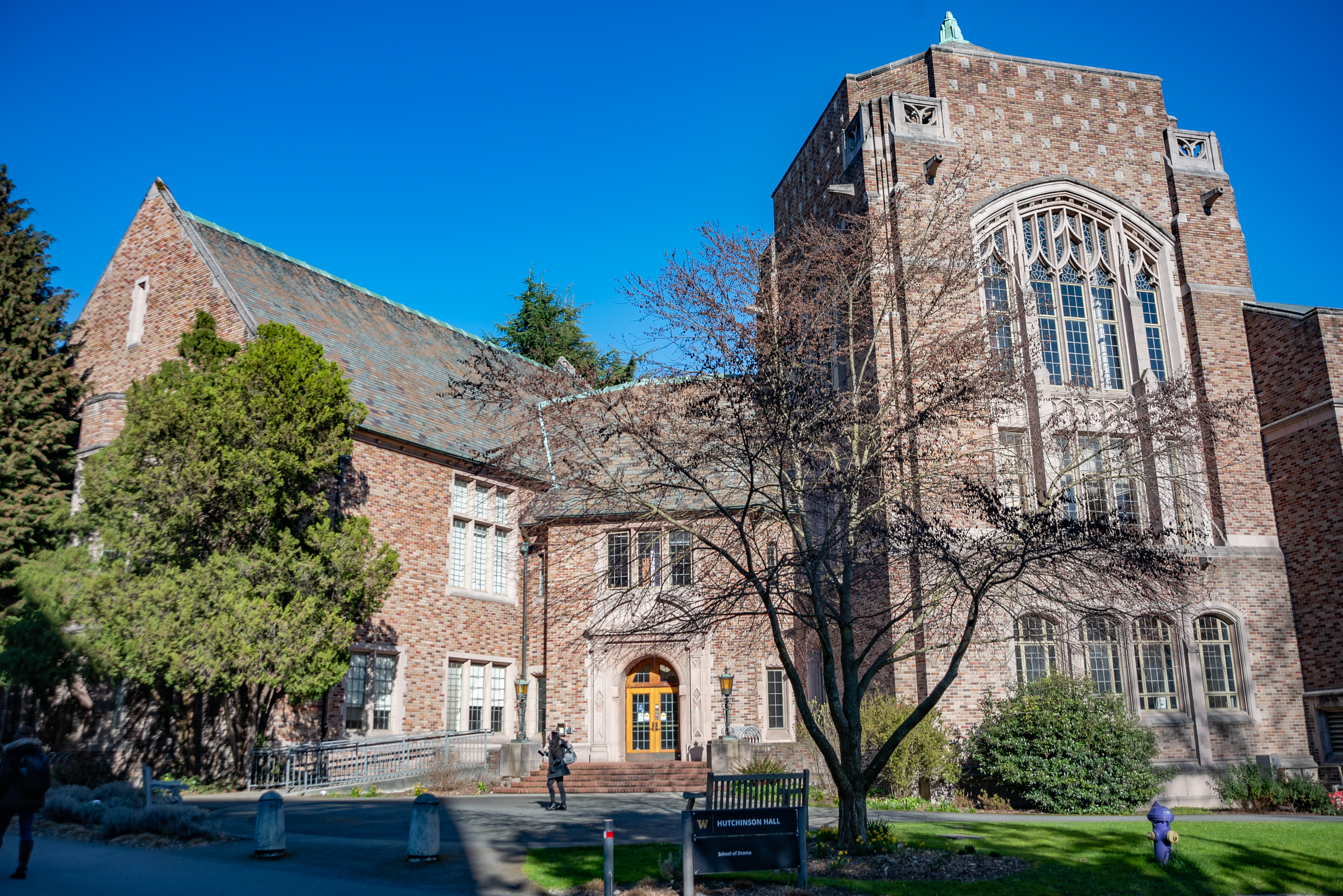
Location: Hutchinson Hall 202
Instructor: Jeffrey Fracé
Office: Hutchinson Hall main office
Email: fracej@uw.edu
Office hours: Please email me to make an appointment.
Description: This course considers theater histories through the bodies and voices of the actors who performed them. Merging theory and practice, it is a course for both theater researchers and theater practitioners. As we share research, practice physical exercises, and create short performances inspired by historical theater forms, we will center the body as the place where theatrical meaning is made. By focusing on five pre-Realism eras—Greek Drama, Noh Drama, Commedia dell’Arte, Elizabethan Drama, and Melodrama—alongside their related global influences and in-common styles, this course empowers actors, directors, and scholars by connecting them to a diverse wealth of theatrical forms that they can use today to deepen their craft.
Learning Goals: By the end of the quarter, my goal is that you can not only speak factually about these five styles, but also describe somatically how the actors’ presence created meaning in their time and place. In other words, you could show and tell, meaningfully. What’s more, you will have practiced applying theory to movement, a praxis-based methodology that you will be able to apply to future theatrical scholarship or projects in acting. Finally, you will have a working vocabulary for examining acting beyond degrees of verisimilitude.
Requirements: Class attendance and participation are essential for success. Always bring a notebook and something to write with, and wear clothes you are comfortable moving in. You will have five group projects over the course of the quarter, plus a final group project. These projects are performances, presented live in the classroom. They will require group rehearsal, some of which will happen during class time, and some of which will have to be scheduled outside of class time. You will need to be communicative and open to making good-faith effort to find mutually convenient rehearsal time together. Some homework will be individual, such as your individual contribution to the group projects, as well as readings and viewings to prepare for in-class discussions, and short reflection papers after each project.
Grading: Out of 100 points,
- 30 points for participation. I will keep daily tabs on the class – all you need to do is to be present, prepared, awake, willing, communicative, generous, enthusiastic and focused on the work to ace this part of the grade. Readings for discussions are in the Modules tab in Canvas. There are 20 classes, each worth 1.5 points full marks.
- 30 points for in-class performances. There are 5 performances at 6 points each. 3 points reflects the group’s work, and 3 points the individual’s work, evaluated not on the polish of the performance, or on acting/singing/dancing skill or technique, but on commitment to your performance objective, and application of the research or theory.
- 15 points for your contributions to rehearsals for those projects, scored from peer evaluations and your own self-evaluation. 5 at 3 points each.
- 15 points for your reflection papers after each performance. 5 at 3 points each.
- 15 points for the final project, a group show-and-tell presentation (aka lecture-demonstration).
- These add up to 105 points, offering a 5-point buffer to accommodate vicissitudes of group projects and unexpected life circumstances. It will not be possible to make up the points assigned to discussions, exercises, rehearsals, and performances.
Communication: Check Canvas. I may offer assignment clarifications or updates via Canvas announcements.
Class rules:
- We begin class on time. Late arrival is distracting and will adversely affect your participation grade. However, better late than absent.
- Cell phones & food at break time only (we will take a 5-minute break roughly half way through class).
- The room is to be left as clean and tidy as it was found.
- GOLDEN RULES: Commit; take care of yourself and of each other; work with an open heart.
Helpful practices: Take care of your health, write in your journal or notebook, assume your classmates are brilliant.
Class Plan
Week one
1/6 Introductions
Greek Drama Intro
Greek Exercises
1/8 Greek Exercises
Form Greek Project Groups
Week two
1/13 due: Greek Readings
Greek Discussion
Greek Exercises
1/15 Greek Exercises in Sylvan Grove
Greek Rehearsal time
Week three
1/20 Noh Drama Intro
Noh Exercises
Greek Rehearsal time
1/22 show: Greek Projects
Noh Exercises
Form Noh Project Groups
Week four
1/27 due: Noh Readings
Noh Discussion
Noh Exercises
1/29 due: Greek Response Papers
Noh Exercises
Noh Rehearsal time
Week five
2/3 Commedia Intro
Noh Rehearsal time
2/5 show: Noh Projects
Commedia Exercises
Week six
2/10 due: Commedia Readings
Commedia Discussion
Commedia Exercises
2/12 due: Noh response papers
Commedia Exercises
Form Commedia Groups
Commedia Rehearsal time
Week seven
2/17 due: Shakespeare Readings
Shakespeare Intro
Shakespeare Discussion
Commedia Rehearsal time
2/19 show: Commedia Projects
Form Shakespeare Groups
Week eight
2/24 Shakespeare exercises
Shakespeare rehearsal time
2/26 due: Commedia response papers
Melodrama Intro
Melodrama exercises
Shakespeare rehearsal time
Week nine
3/3 show: Shakespeare projects
Melodrama exercises
Form Melodrama groups
3/5 due: Melodrama Readings
Melodrama discussion
Melodrama rehearsal time
Week ten
3/10 due: Shakespeare response papers
Melodrama rehearsal time
show: Melodrama projects
3/12 Form Final teams
In-class Final rehearsal time
Finals week
3/17 due: Melodrama response papers
3/18 show: Final projects
School of Drama Consent Policies
- Consent: Consent is mutual communication and respect for each other’s physical boundaries. It is Considered, Reversible, Informed, Specific, Participatory.
- The School of Drama cares about creating learning and training environments that equitably support students across all identities with strong consent policies.
- Strong consent policies enhance student learning.
- Brave space learning environments allow us to explore theories and practices of theater in ways that do not violate or sexualize others, especially students.
- Every student who moves through this program will be honored in the work of theater.
- Through a shared understanding of consent, students – undergraduates and graduate students - can stretch, grow, and make big choices as artists.
- For additional resources see the FRIES + CRISP tools of consent
Accountability:
- We will name harm and seek repair when harm happens.
- We have made an accountability and action plan for faculty, staff, and students. Link here. All students are responsible to the UW’s Student Code of Conduct,
Personal Relationships:
- Romantic and/or sexual relationships between graduate students and undergraduate students are discouraged
- This applies to students and faculty/staff as well.
- If you are feeling harassed or violated, that is not okay. We want to hear about it and we can help.
Class Content and Student Conduct:
- The School of Drama believes the formal classroom environment and related academic activities, including productions, lectures, and other events, should be respectful spaces where sensitivity to personal backgrounds, experiences, and beliefs can be balanced with rigorous and thoughtful discourse.
- If you believe material and/or experiences in the course will compromise the success of your learning, please consider one or more of the following options: 1) approach your instructor and share your concern: you may be able to find a suitable alternative arrangement or assignment; 2) Speak with the program area head or Executive Director about your concern
- Voicing A Concern: All students have a right to engage and work in the School of Drama without being sexualized or harassed. If you are in a class, and you feel like you are being sexualized or harassed in any way, you can get help through the resources linked below.
- School of Drama voicing a concern policy [link]
- Safe Campus [link]
- Counseling Center [link]
- Title IX [link]
IMPORTANT UPDATE from Executive Order #81:
If the complaint or concern involves discrimination, harassment, misconduct or retaliation based on a protected characteristic of race, color, creed, religion, national origin, citizenship, sex, pregnancy, age, marital status, sexual orientation, gender identity or expression, genetic information, disability, or veteran status, the faculty or staff member (or any UW employee) will be required to make a report to the University Civil Rights Compliance Office (CRC).
- If you are a UW student employee reporting to one of your supervisors a concern that involves one of the protected characteristics, the supervisor will be required to include your name in the report.
- If you are a student, but NOT a UW student employee (or if you are a student employee NOT reporting to your supervisor), your name will not be required to be included in the report and you can remain anonymous if you wish.
Classroom and Rehearsal Guidelines for Stage Intimacy
Concurrent with UW’s policy on Affirmative Consent*, these guidelines are all towards the goal of affirming that intimate action, though sexual or heightened in nature, is a “simulation” – like a fight – intended to convince an audience. It is not the ‘real thing.”
1 – Identify any intimate or heightened physical action in a scene together with your partner before rehearsing
2 – State any personal boundaries you may have regarding physical touch or action.
3 – After your rehearsal, check in with your partner. Did anything arise that was uncomfortable? Were the boundaries set in # 2 successful?
4 - After your improvisation or rehearsal conversation, set and/or choreograph all physical action.
5 – If these guidelines aren’t being honored or you’re having a difficult time voicing your concerns, please speak to your teacher. If this problem arises during a rehearsal process, speak to your director or your stage manager.
Troubleshooting
1 – What do I do when I feel uncomfortable speaking up in the moment?
A: Speak to the teacher who assigned you the material
B: If you feel uncomfortable speaking with that teacher, go to a faculty member you feel most comfortable with. Use the “How To Converse” guidelines below.
2 – What do I do when I didn’t realize I was uncomfortable until the moment has passed?
A: This affords you time to figure out how you want to speak to your acting partner about the situation. Express yourself honestly and openly. Put boundaries in place for your next rehearsal.
3 - What do I do when my partner is unable to listen or adjust?
A: Speak to the teacher who assigned you the material
B: If you feel uncomfortable speaking with that teacher, go to a faculty member with whom you feel most comfortable.
Conversation Techniques
1 - Speak from the first person “I” and not from an accusatory “you”.
2 - When listening, stay open and repeat what you have heard at the end of the conversation back to your partner. EXAMPLE:
“I feel uncomfortable when you kiss my neck.”
“Ok, you feel uncomfortable when I kiss your neck. What do you suggest instead?”
This is all towards the grander gesture of Owning Your Own Voice.
*Affirmative Consent: Affirmative Consent is a knowing, voluntary, and mutual decision among all participants to engage in sexual activity. Affirmative consent can be given by words or actions, as long as those words or actions create clear permission regarding willingness to engage in the sexual activity. Silence or lack of resistance, in and of itself, does not demonstrate consent. The definition of consent does not vary based upon a participant’s sex, sexual orientation, gender identity, or gender expression.
For UW’s Policy on Affirmative Consent, refer to the UW Student Conduct Code Chapter 210, Section 7, or UW Executive Order No. 51.
This Rehearsal Guide for Stage Intimacy was adapted from NYU’s rehearsal guide, authored by Fay Simpson.
Respect for Diversity Statement: The diversity students bring to this class (including gender identity, sexuality, dis/ability, age, socioeconomic status, ethnicity, race, nationality, religion, and culture) should be honored as a resource, strength, and benefit. I will do my best to create an environment in which each class member is able to hear and respect others. If something is said or done in the classroom, or in a discussion, or in a group process, by the instructor or guest artist or other students that is particularly troubling or causes undue discomfort or offense, I would like to know about it. While my intention will not be to cause offense, the impact is something that I consider to be very important and deserving of attention. The Department of Drama developed the following resource that can help you navigate how to proceed if you would like to voice a concern beyond me as your instructor: https://drama.washington.edu/process-voicing-concerns (Links to an external site.)
Academic Accommodations: Your experience in this class is important to me. It is the policy and practice of the University of Washington to create inclusive and accessible learning environments consistent with federal and state law. If you have already established accommodations with Disability Resources for Students (DRS), please activate your accommodations via myDRS so we can discuss how they will be implemented in this course. If you have not yet established services through DRS, but have a temporary health condition or permanent disability that requires accommodations (conditions include but not limited to mental health, attention-related, learning, vision, hearing, physical or health impacts), contact DRS directly to set up an Access Plan. DRS facilitates the interactive process that establishes reasonable accommodations. Contact DRS at disability.uw.edu (Links to an external site.)
The UW Food Pantry: A student should never have to make the choice between buying food or textbooks. The UW Food Pantry helps mitigate the social and academic effects of campus food insecurity. We aim to lessen the financial burden of purchasing food by providing students with access to food and hygiene products at no-cost. Students can expect to receive 4 to 5 days’ worth of supplemental food support when they visit the Pantry. For information including operating hours, location, and additional food support resources visit https://www.washington.edu/anyhungryhusky/the-uw-food-pantry/ (Links to an external site.)
Academic Honesty: Students at the University of Washington are expected to maintain the highest standards of academic conduct. Cheating, plagiarism and other forms of academic misconduct are considered serious offenses and could result in a variety of disciplinary actions, including suspension or permanent dismissal from the University.
For more information on Academic Honesty (Cheating and Plagiarism) see:
http://depts.washington.edu/grading/pdf/AcademicResponsibility.pdf (Links to an external site.)
For information on Student Standards of Conduct see:
https://www.washington.edu/cssc/for-students/student-code-of-conduct/ (Links to an external site.)
http://www.washington.edu/admin/rules/policies/WAC/478-121TOC.html (Links to an external site.)
Religious Accommodations: Washington state law requires that UW develop a policy for accommodation of student absences or significant hardship due to reasons of faith or conscience, or for organized religious activities. The UW’s policy, including more information about how to request an accommodation, is available at Religious Accommodations Policy (https://registrar.washington.edu/staffandfaculty/religious-accommodations-policy/) (Links to an external site.) (Links to an external site.). Accommodations must be requested within the first two weeks of this course using the Religious Accommodations Request form (https://registrar.washington.edu/students/religious-accommodations-request/) (Links to an external site.) (Links to an external site.).
Safe Campus: Call SafeCampus at 206-685-7233 anytime – no matter where you work or study – to anonymously discuss safety and well-being concerns for yourself or others. SafeCampus’s team of caring professionals will provide individualized support, while discussing short- and long-term solutions and connecting you with additional resources when requested.https://www.washington.edu/safecampus/ (Links to an external site.) (Links to an external site.)